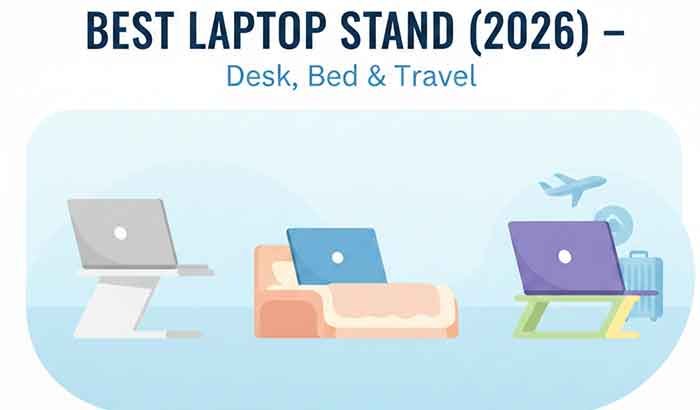
Best Laptop Stand (2026) – Desk, Bed & Travel
Quick overview — what you’ll get
- Why laptop stands matter for posture, heat, and productivity (with India-specific price reality).
- How to choose: desk, bed, table, portable, vertical — clear pros/cons.
- 10 product & category recommendations popular in India (budget → premium).
- Buying checklist, maintenance tips.
Table of Contents
A simple story (and a common pain)
Two years ago I treated a recurring neck ache as “just sitting too long.” Then I propped my laptop on a stack of books — instant relief. But a stack is temporary; a proper laptop stand fixed the root cause: bad screen angle and poor airflow. In India today, inexpensive stands can make the same immediate difference for students, work-from-home professionals, and creators — if you choose the right type for where you work. (Yes, even for weekend laptop-in-bed sessions.)
Read More: Where is my Train App: Track Trains & Check PNR Easily
Fact box — Fast facts
- Ergonomics: Raising the screen to eye level reduces neck flexion and upper-back strain.
- Thermals: Open-frame metal stands improve airflow vs flat surfaces, reducing overheating.
- Price range (India, 2026): ₹300 — ₹8,000+ depending on material, adjustability and brand.
Why this guide (and what I tested mentally)
I reviewed leading product roundups (TechRadar, Tom’s Guide, Wired/Wirecutter summaries), India marketplaces (Flipkart, Amazon, brand sites), and user threads on Reddit and Quora to map what real users ask and where gaps exist (e.g., clear bed-use guidance, India price sensitivity, and local brands like Portronics). This article fills those gaps with practical buying rules, India price checkpoints, and real-use tips.
Laptop Stand types (what to use where)
Each mini-section is ~80–120 words for easy AI summarization.
1) Desk stands (ergonomic, adjustable)
Best when you use an external keyboard/mouse. Look for height adjustability, stable base, and a lip to stop sliding. Metal, ventilated platforms (aluminum) are ideal for airflow and durability. Popular models recommended in global tests: Lamicall and Lamicall-style foldables are reliable everyday picks.
When to buy: daily workstation, long video calls, content creation.
Visual: Image: adjustable desk stand next to an external keyboard + mouse.
2) Bed stands / lap desks (comfort + mobility)
These prioritize flat, stable surfaces with legs or cushion bases. They are not ergonomically perfect (neck angle still matters) but are great for short sessions or reading in bed. If you intend long work-from-bed sessions, choose a height-adjustable lap table with airflow cutouts.
When to buy: casual browsing, watching shows, short work bursts.
Visual: Image: wooden or folding lap table with cup holder.
3) Table stands / multi-purpose (kitchen, cafe)
Slim, portable options that raise the laptop slightly for ventilation. Often inexpensive and lightweight; they’re a good bridge between lap desks and full desk stands. Useful where desk space is shared.
4) Vertical stands (space saver)
Store laptops vertically when not in use or to create a dual-screen-like docked setup. Good for small desks but not for active typing. Vertical stands can reduce desk clutter and aid cooling when the laptop is closed.
5) Portable/foldable stands (travel & hybrid workers)
Brands like Roost (original), Nexstand clones, and MOFT offer ultra-compact height/angle adjustments. They balance stability with portability; premium models cost more but fold small enough for backpacks. Reddit threads show these are the go-to for travelers.
India buying landscape & pricing (2026 snapshot)
- Lowest tier: ₹300–₹800 — simple plastic/aluminum foldable stands available from local sellers and marketplaces. Expect minimal adjustability.
- Mid tier: ₹800–₹2,500 — adjustable metal stands from brands like Portronics, Lamicall clones, and generic ergonomic tables on Flipkart/Amazon. Often best value for daily use.
- Premium: ₹2,500–₹8,000+ — Roost, premium Lamicall, MOFT Pro, and designer or multi-function lap desks with better materials and warranty. These appear in curated lists and global roundups.
Price tip: Watch Amazon / Flipkart sale seasons (Big Billion Days, Diwali, Black Friday) for 20–60% discounts. Marketplace product pages and brand stores often list frequent sales.
Buying checklist (quick scan before you buy)
- Compatibility: up to what screen size / weight (e.g., fits 13–16″ laptops).
- Adjustability: steps of height/angle and locking stability.
- Material: aluminum for cooling; wood for aesthetics; plastic for low cost.
- Portability: foldable vs fixed.
- For bed use: non-slip surface + heat ventilation + leg design.
- Warranty & returns: check Indian seller return policies and warranty.
Quick Takeaway (≤50 words): For most Indian users, a mid-tier aluminum adjustable desk stand (~₹900–₹2,000) gives the best mix of ergonomics, airflow, and value.
Top recommendations for India (categories + example picks)
I focus on categories, with examples buyers can find locally. Prices fluctuate—check the marketplace links.
- Best overall (desk): Lamicall foldable adjustable stand — stable, ventilated, travel-friendly. Recommended by global roundups.
- Best budget: Generic aluminum foldable stands (Portronics “My Buddy” series) — under ₹1,200 and widely available on Amazon/Flipkart.
- Best bed table: Wooden/folding lap tables from Flipkart/WoodenStreet — stable and roomy.
- Best portable (travel): Roost / Nexstand style models — compact and lightweight (higher price).
- Best premium / long-term: MOFT Pro, premium aluminum stands recommended by testers for sturdiness and build.
Where to visualize: Chart: price vs portability vs ergonomics (three-axis comparison).
How to use a laptop stand properly (to get ergonomic benefit)
- Raise screen so the top third of the display is at eye level.
- Use an external keyboard and mouse when screen is significantly elevated.
- Keep elbows at ~90°.
- For bed use, stop after 30–45 minutes to avoid neck stress.
- If overheating persists, add a ventilation stand (open frame) or a passive cooling pad.
What changed in 2026 (short update)
- Design trend: more ventilated, thin-profile aluminum stands and multi-function lap desks became standard for hybrid work.
- Market: Indian marketplaces grew larger supply of budget to midrange stands (Portronics and local sellers), reducing entry price points for good stands.
- User behavior: Forums show travelers favor collapsible Roost/Nexstand options while desk workers prefer adjustable Lamicall styles.
Maintenance & longevity tips
- Clean vents and hinges monthly to prevent dust buildup.
- Don’t exceed specified weight limits — avoids hinge failure.
- Use silicone pads or anti-slip strips when typing aggressively.
- For wooden lap desks, avoid direct sunlight and liquid exposure.
Actionable next steps (2–3 key takeaways)
- If you work at a desk daily: buy an adjustable aluminum stand (mid-tier ₹900–₹2,500). Use external keyboard/mouse.
- If you work from bed or couch occasionally: get a folding lap table with legs and ventilation; limit sessions to under 45 minutes.
- If you travel: choose a compact Roost/Nexstand-type or MOFT for portability.
FAQs (People Also Ask)
Q1: Are laptop stands good for heat reduction?
A: Yes — open-frame metal stands increase airflow under the laptop and can reduce surface temperatures compared with flat surfaces. If heat persists, pair with a passive cooling pad.
Q2: Can I use a laptop stand on a bed?
A: Use a lap desk (flat surface with legs) rather than a standard desk stand. Stands that elevate the laptop on soft surfaces may be unstable and still cause neck strain if not used with breaks.
Q3: How much should I spend for a durable stand in India?
A: For a durable, ergonomic desk stand aim ₹900–₹2,500. Premium portable stands cost more but fold small for travel. Indian marketplaces often discount in sale seasons.
Q4: Which brands are available in India?
A: Local brands (Portronics, Bodhee), global favorites (MOFT, Lamicall), and many generics on Flipkart/Amazon. Check seller ratings and return policy.
Closing — a human nudge
A laptop stand is low-cost but high-impact: better posture, cooler laptops, and a tangible boost to comfort. Start with one simple rule — if you feel neck or shoulder strain after 30–60 minutes, it’s time to raise the screen. Try a mid-tier adjustable aluminum model first; you’ll notice the difference in a day.